

Menopause: what it is and how it may present
Menopause is a natural stage of life that marks the end of menstruation and reproductive potential due to the loss of ovarian function. Menopause is diagnosed after 12 consecutive months without a menstrual period (when no other cause is present). It typically occurs between ages 45 and 55, with an average age of 51 in Canada. The transition leading up to menopause, called perimenopause, can last 4–8 years or longer and is characterized by hormonal fluctuations, which can lead to irregular menstrual cycles and menopause symptoms like hot flashes and night sweats. After menopause, a person enters postmenopause, the stage that continues for the rest of life.
Symptoms are common and can vary widely from person to person. Some people experience little to no noticeable change, while others experience symptoms that may affect daily life, such as:
- hot flashes
- night sweats
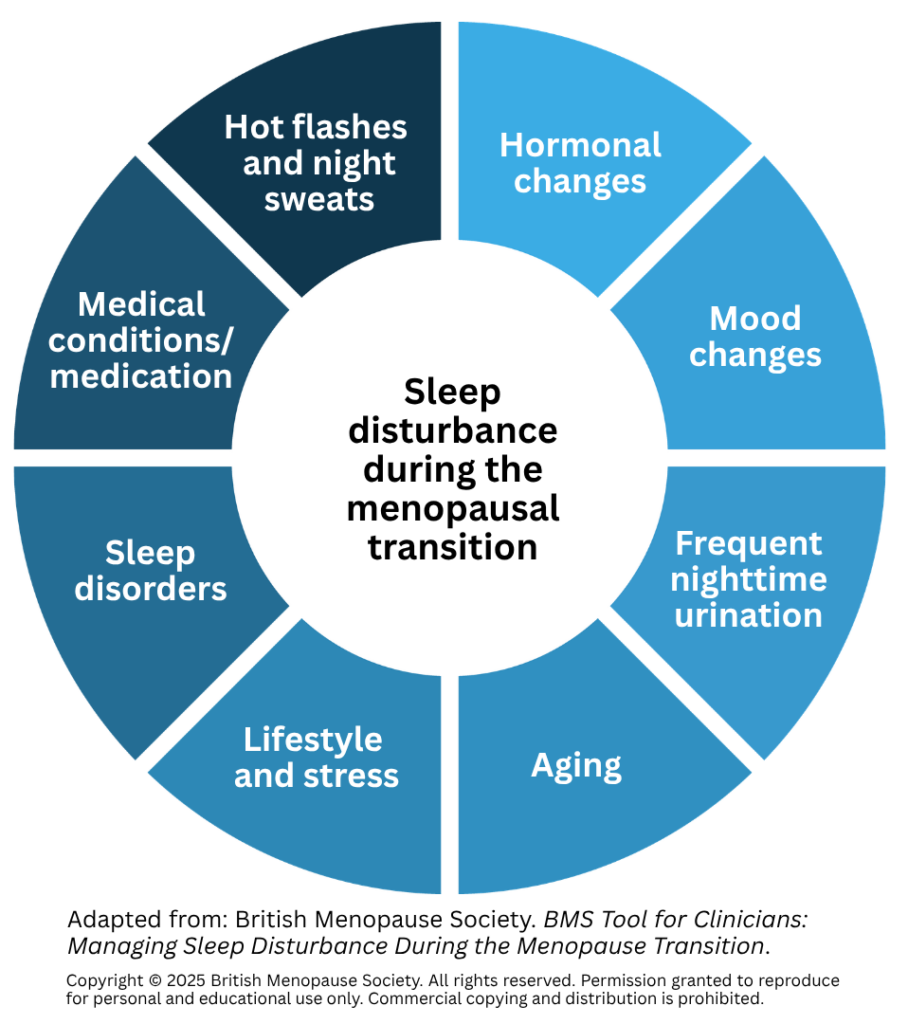
- sleep disturbance
- mood swings
- anxiety
- difficulty concentrating (“brain fog”)
- vaginal dryness or pain during sex
- urinary symptoms, such as urine leakage
These symptoms are common and are a normal part of the menopausal transition.


 Hormonal changes