

Top

3 habits and 1 tool for better sleep

Sleepwell / CBTi / 3 habits and 1 tool for better sleep

The following information is adapted from our 3 and 1 resource, available here. The 3 and 1 resource is based on brief behavioural therapy for insomnia (BBTi), an evidence-based approach that focuses on the behavioural strategies at the core of cognitive behavioural therapy for insomnia (CBTi). We encourage you to print a copy and complete the sleep diary as you work through the guidance for improving your sleep.

The 3 and 1 resource is intended for people who know they have insomnia. It is not designed to treat other sleep disorders (e.g., sleep apnea). If you are unsure whether you have insomnia, speak with your healthcare professional. The information can be used whether or not you are taking sleeping pills.

Struggling with sleep?

Insomnia often starts as an occasional problem but can turn into an ongoing struggle, leaving you feeling as though you’ve forgotten how to sleep.

PEOPLE WITH INSOMNIA
  • Have difficulty getting to sleep or staying asleep
  • Don’t feel well rested
  • Are looking for a better night’s sleep

The reason why insomnia starts is often different from what keeps it going, and strategies that once helped may no longer work. Habits play a role in keeping insomnia going, and changing them can create the right conditions for better sleep.

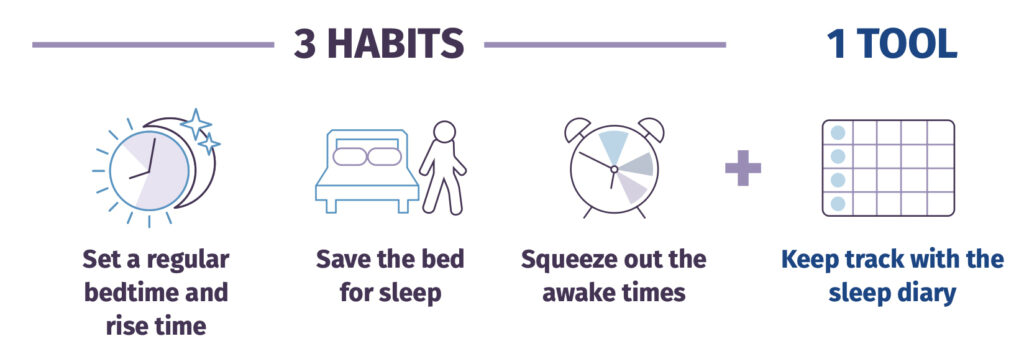
Three habits and one tool that work as a team

Here we present three proven habits and one simple tool to help you get your sleep back. The habits work with your body’s natural sleep systems to improve sleep over time. You can start with the first two habits and add the third when you’re ready, or try all three from the start — the choice is yours.

Your main tool is the sleep diary. Recording your sleep each morning helps you see patterns and track how your sleep responds to the habits. Your diary can also guide small changes to your sleep schedule. For the best results, stick with the habits and keep using your diary.

HABIT 1 Set a regular bedtime and rise time

Going to bed and getting out of bed at the same time each day helps set a routine, making your sleep more regular.

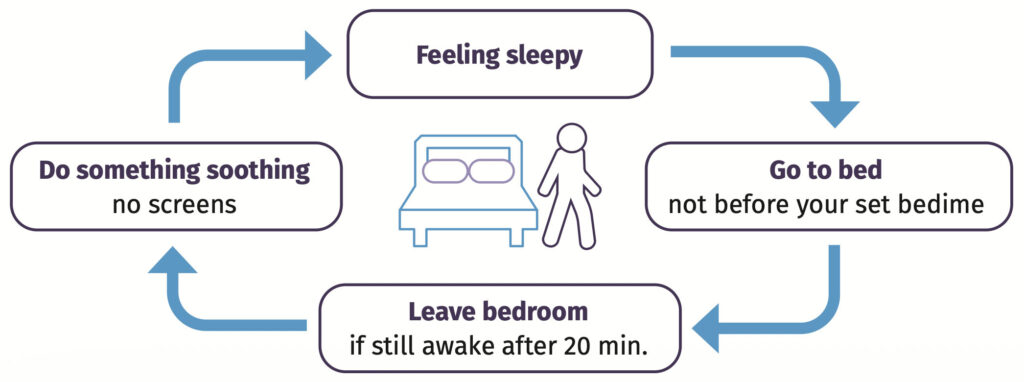
  • Set a bedtime that matches when you usually feel sleepy and go to bed at that time each night. This may be later than your usual bedtime. If you are not sleepy at that time, wait until you feel sleepy before going to bed.
  • Set a rise time and get out of bed at that time each day. Don’t stay in bed after your rise time.

HABIT 2 Save the bed for sleep

When you lie awake in bed night after night, your brain can begin to link the bed with wakefulness instead of sleep. Use these strategies to help retrain your brain to connect your bed with sleeping.

  • Use your bed only for the “3 Ss” – sleep, sickness, and sex. No reading, screens, or other activities.
  • Stay awake and out of bed until your bedtime. Stay up past your bedtime if not sleepy.
  • Get up and start your day at your rise time no matter how your sleep went.
  • Avoid naps if possible. If needed for safety, nap before 3:00 pm for 30 minutes or less.
  • If you’re unable to fall asleep after about 20 minutes, get out of bed. Return only when you feel sleepy. Repeat as needed during the night.

TIPS

Don’t watch the clock, just estimate the time. Getting out of bed can be hard, especially overnight. Plan ahead by setting up a cozy, low-light space with something relaxing to do, like reading or doodling.

HABIT 3 Squeeze out the awake times

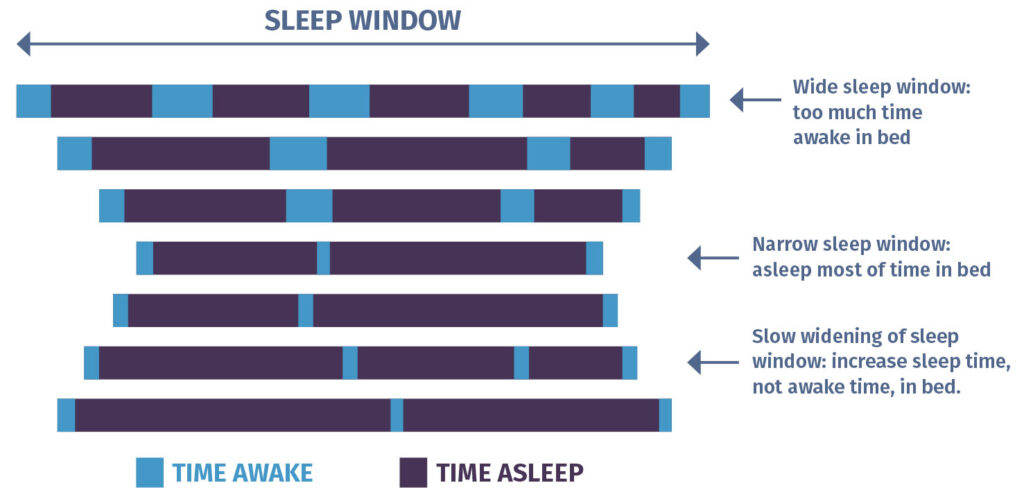
Your sleep window is the time between when you go to bed and when you get up in the morning. If you spend a lot of that time awake, narrowing your sleep window can help. Spending less time in bed builds sleep pressure, which helps you fall asleep faster and wake less during the night. Most people keep the same rise time and move their bedtime later when narrowing the sleep window.

Narrow: Each week, gradually narrow your sleep window by moving your bedtime later by about 10 minutes every 2–3 days, so that by the end of the week you are spending 20–30 minutes less time in bed. Continue this for 2 or more weeks until most of the time you spend in bed is actually spent sleeping. Don’t reduce your sleep window below 6 hours.

Widen: Once your sleep becomes more solid, begin to slowly widen your sleep window, usually by adding 5 minutes of time in bed every 2–3 days. Expanding the window gradually helps keep the time awake from returning. This process takes time, but when combined with the other two habits it is usually effective.

Substantially narrowing your sleep window is not advised for people with sleep-sensitive health conditions, such as epilepsy and bipolar disorder. Speak with your health care professional for guidance.

YOUR 1 TOOL The sleep diary

Each morning, use the sleep diary to record your sleep. Over time, look for patterns and notice how your sleep changes as you practice the three habits. Follow the bedtime and rise time that match your current sleep window, and work on reducing the amount of time you are awake during your sleep window.

What does better sleep look like?

Better sleep often shows up in simple, noticeable ways:

Nighttime: Falling asleep more easily, waking less often, and spending less time awake in bed.

Daytime: Feeling more rested or refreshed, clearer-headed, steadier on your feet, and in a better mood.

DOWNLOAD THE ``3 and 1`` RESOURCE

Looking for more ways to improve your sleep?

For many people, the strategies in the 3 and 1 resource are enough to improve sleep. If your insomnia persists or you would like additional support, CBTi builds on these behavioural strategies by also addressing the thoughts and beliefs that can interfere with sleep. CBTi is the recommended treatment for chronic insomnia and is typically completed over 4–8 weeks.

Click here to learn more about CBTi and here to explore available CBTi options.